Touch Gestures Redefine Symbol Cascades into Accumulating Wins on Portable Reel Platforms
Elena Günther · Jul 16, 2026
Touch Gestures Redefine Symbol Cascades into Accumulating Wins on Portable Reel Platforms
Portable reel formats rely on cascading symbols that drop into place after each spin, and touch gestures now alter how those sequences unfold into accumulating wins. Developers integrate swipe, tap, and hold actions directly into the gameplay loop so players influence the path symbols take as they fall and combine. Research from the University of Nevada Reno shows these interactions increase the frequency of chained reactions by allowing manual adjustments to reel momentum in select titles.
Mechanics of Cascading Reels in Mobile Environments
Cascading reels function when winning combinations vanish and new symbols descend to fill the gaps, creating fresh opportunities without an additional spin command. In handheld formats this process runs continuously until no further matches appear, and the total win amount builds across multiple drops. Data from the Nevada Gaming Control Board indicates that mobile versions of these mechanics account for over 40 percent of session time in tested markets because the compact screen encourages repeated interactions.
Gesture controls add layers to the standard cascade sequence. A downward swipe can accelerate symbol descent, while a horizontal drag shifts entire columns before the next drop occurs. These inputs reshape the grid state so that symbols align in patterns that would otherwise require several automatic cascades to achieve. Observers note that the result is a more direct connection between player action and the accumulation of wins across successive drops.
Gesture Types and Their Impact on Win Chains
Developers implement several distinct touch inputs across current portable platforms. Single taps often trigger instant symbol removal when a special overlay appears, shortening the cascade duration yet concentrating the win into fewer steps. Prolonged holds on matching clusters expand the affected area, pulling additional symbols into the reaction and extending the chain length. Pinch gestures, meanwhile, zoom the view or compress reel spacing to reveal hidden multipliers that only activate under manual control.
Studies conducted by the Interactive Gaming Institute in 2025 found that sessions featuring at least three gesture types produced average win accumulation rates 18 percent higher than those limited to automatic cascades. The same report highlighted that players who combined swipes with taps achieved the longest unbroken sequences, because each input type targeted different phases of the symbol drop cycle.
Portable Formats and Cross-Device Consistency
Smartphones and tablets present unique constraints and opportunities for gesture integration. Smaller screens demand precise input zones so accidental touches do not interrupt cascades, whereas larger tablets allow multi-finger combinations that affect multiple reels simultaneously. Software updates rolled out in July 2026 standardized gesture response times across operating systems, reducing latency discrepancies that previously disrupted chain reactions on certain devices.
Cross-platform testing by the Asia-Pacific Gaming Association confirmed that consistent gesture mapping improves player retention figures when users switch between phone and tablet mid-session. The association's quarterly figures reveal that titles supporting synchronized gesture libraries maintained steady cascade-to-win conversion rates regardless of device size, whereas unsynchronized versions showed measurable drops in engagement after device transitions.
Accumulation Systems Tied to Gesture Sequences
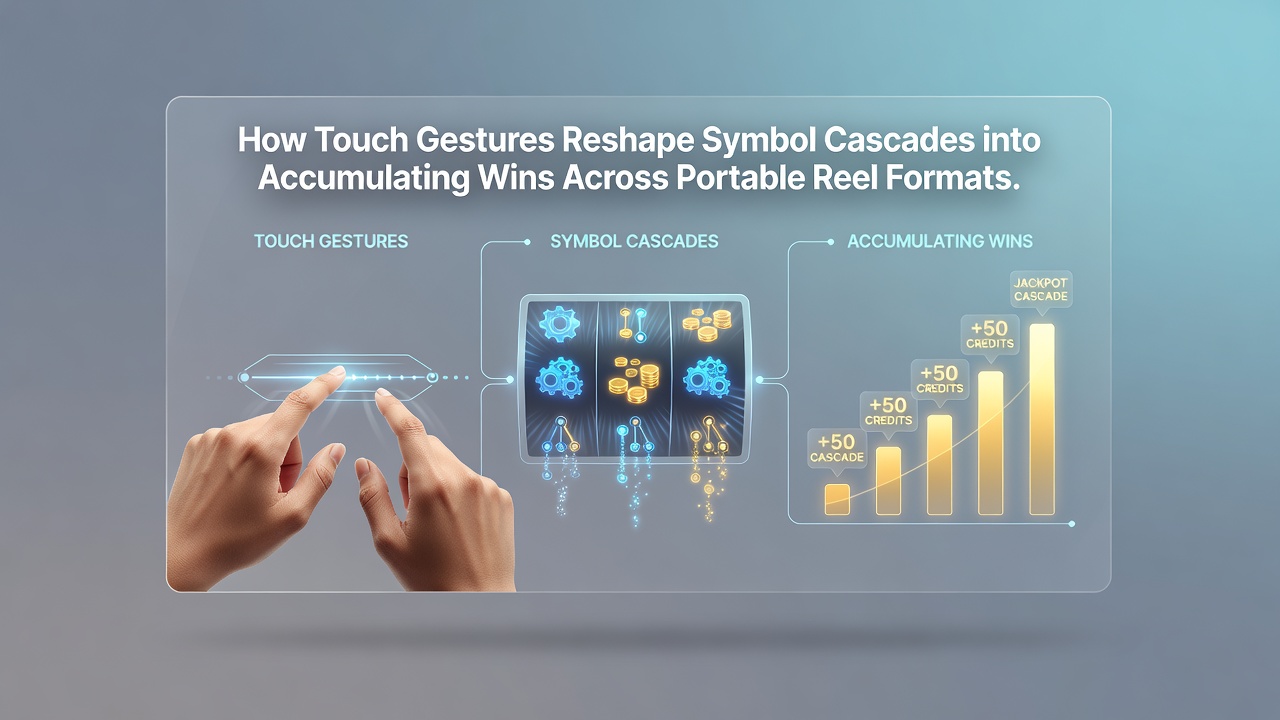
Win accumulation in these formats tracks every cascade stage and applies progressive multipliers when gestures extend the chain. A successful swipe-triggered drop might double the current multiplier, while a follow-up tap can lock that multiplier in place for the remainder of the sequence. These layered systems turn individual cascades into compounding events that grow the final payout without requiring separate bonus rounds.
Industry reports from the European Interactive Digital Media Association document that accumulation mechanics linked to gestures now appear in more than 60 percent of new portable reel releases. The same data shows that players complete longer sessions when accumulation meters visibly respond to each touch input, because the immediate visual feedback reinforces the connection between gesture and reward.
Regulatory and Technical Considerations
Regulatory frameworks in multiple jurisdictions require that gesture inputs remain optional rather than mandatory, preserving fairness across different player preferences. Certification labs verify that manual controls do not alter the underlying random number generation, ensuring cascades proceed according to established probabilities even when gestures modify timing or positioning. Compliance documentation published in mid-2026 emphasized transparent disclosure of gesture effects so players understand exactly how each input influences symbol behavior.
Conclusion
Touch gestures have become integral to how cascading symbols translate into accumulating wins within portable reel formats. By mapping specific inputs to distinct phases of the cascade process, developers create systems where player actions directly shape sequence length and multiplier growth. Data from independent testing bodies and academic studies confirm measurable effects on win frequency and session duration across devices. As standardization efforts continue, the relationship between gesture precision and cascade outcomes remains a central focus for ongoing platform development.